Thursday, May 22, 2014

Week 4 - Report & Reflection

This week's discovery activity is about curation tools. Curation tools may be used to organize and create various digital activities to enhance efficiency. In this session, there were multiple curation tools that were introduced to me, however, there are many others that are in the world wide web. In this session I have discovered the curation tool called Scoop.it. This tool helps with creating an online magazine on a topic, then it goes to various social media networks. This is convenient to various people that like to keep up to date with various social media platforms. Examples of these include Youtube artists that post everything to all their social media platforms to keep their subscribers updated.
Retrieved from http://www.curata.com/blog/content-curation-tools-the-ultimate-list/
When discovering about the bookmarking tools and the use of tagging it helps keep everything organized and in one place. This is also one of the categories of my PLE which is to organize content. In using these skills that I have developed in this week's session I am able to organize my content. This will also become useful to my educational activities as I implement these skills into various areas. Besides education activities it also helps with my work activities. In general, being organized is helpful to me in enhancing efficiency in various tasks.
Valid and reliable online bookmarks contribute to my work and building knowledge. When reading and gathering information for assignments, valid and reliable resources are necessary. Therefore, in order to ensure that it is reliable and correct multiple resources need to be read and evaluate its credibility. Having false resources in my work may result to the whole work leading to a wrong path. This being said, one false resource may result to multiple false points in my work.
In this course I learnt multiple skills and techniques about becoming a digital citizen and gaining digital literacy. For example, a tool that was introduced to me in the last session was the RSS feed reader. It compiles all reading resources into one area and not having to type each url and read through each one. This allows more efficiency when doing reading for assignments or interests. With the Google Feed Reader, I am able to connect it to my learning not only to this course, but also to future courses. Overall, I think that the RSS feed reader and the curation tools help enhance productivity with organizing content into one area.

Saturday, May 17, 2014

Week 3 - Report & Reflection

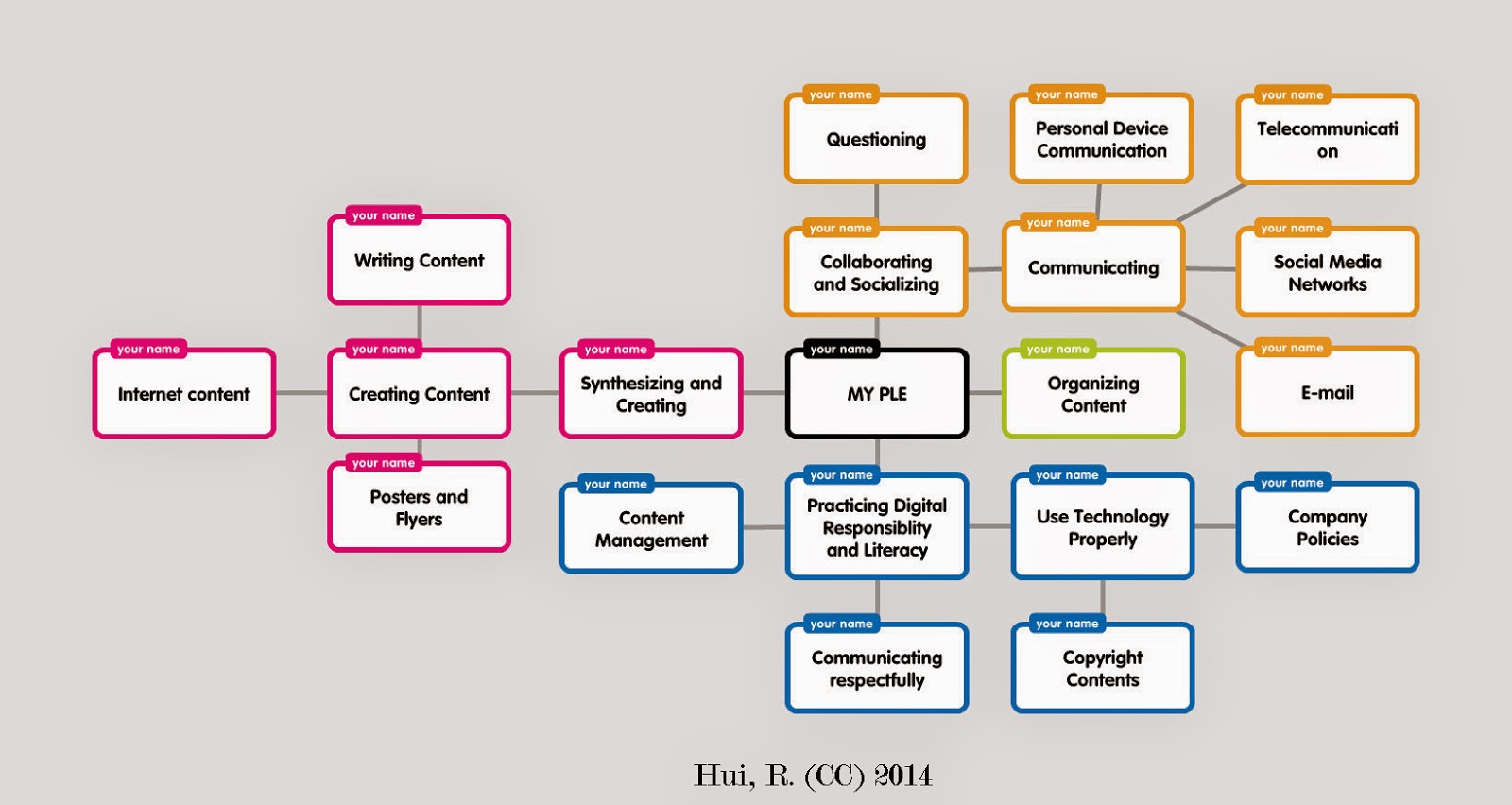
In this session, the main focus was RSS feed readers. The item of interest on my feed reader is The Danger of all-Nighters. Without a doubt, I have pulled multiple all-nighters even with knowing the consequences. Procrastination is one thing that creates pulling an all-nighters. Besides procrastination, time management is another reason. Moreover, caffeine is paired with all-nighters for me. With this said, numerous cups of caffeine is consumed with all-nighters. With this post, it states the symptoms of all-nighters and suggestions. Personally, in order to minimize my all-nighters each year, I can take action of some of the suggestions that the blog post has recommended. With RSS feed readers it contributes to my work in building knowledge about digital literacy, responsibility, and citizenship by having everything in one area. This saves time instead of going through each website. With RSS feed readers it can be adapted in future assignments and presentations when gathering information. Besides education, it can be used as an area where I can read about all the posts that I am most interested in. The RSS feed reader is a multi-usage tool. It can be categorized in my PLE diagram in all four my categories. These categories are organizing content, practicing digital literacy and responsibility, synthesizing and creating, and collaborating and socializing.

Hui, R (CC) 2014.

My Experience with RSS Feeds

First of all, this is my first time encountering RSS feed. Before session three, I have not encountered or touched RSS feed before. Therefore, this is an interesting session for me to learn about in the digital context. Before this, I usually tracked my interests from various social media networks. This includes instagram, facebook, twitter, pinterest, and blog posts. However, RSS feed made it less complex by compiling various types into one area rather than going to different social media websites.
For this post, the permalink is titled 'A Trip And a Half'. This post took place in Dover Street Market London. I chose this post amongst the other posts because I found the visuals in this blog post unique. As well, the designs were unique. Personally, it had a modern but unique twist to the overall designs and setting of the atmosphere. The first image I saw with the knitted column was what made me want to scroll down to look at more pictures of the area.
Overall, RSS feed would be something that is helpful to me in future projects and assignments and could be a part of my PLE.

 Retrieved from http://textbookstop.wordpress.com/2011/05/23/how-rss-feeds-work/.

Thursday, May 8, 2014

Week 2 - Report & Reflection

A personal learning environment has its importance as a learner. The abbreviation that is used for personal learning environment is PLE. Dr. Alan Cann has dedicated a post about PLE. He defined a PLE as a system that helps learners take control of and manage their own learning (Cann, 2010). Besides this the PLE is considered as a support for learners to set their own learning goals, manage their learning, manage both content and process, and communicate with others in the process of learning (Cann, 2010). In other words it gives one about how one learns. Below is a image of my PLE that I have created. 
Hui, R (CC) 2014.
In five to ten years time into my future, I envision myself working in the tourism industry. Possibly working in Hong Kong or Asia in an airline industry or becoming a tour guide. Currently, I am also working as a travel agent at a travel agency in Toronto. In order to get to my envision in five to ten years I would need to increase my knowledge and skills. I have recently started my job at the tourism industry therefore I would have a lot to learn. First of all, in order to be certified to be working in an Ontario registered tourism agency, the staff must have a TICO certification. Pursuing this further, gaining a TICO certification is necessary. Besides this, gaining more knowledge about how to handle various situations with customer interactions is something that is necessary. At the moment, I think that my learning environment is acceptable. Everyone respects one another and helps each other when necessary. Besides this, we help each other with new and updated information and other things that is needed to update one another. Habits can be good and bad. However, at the moment I think one of my bad habit is that I can misread things when I start to panic. Furthermore, to reduce this bad habit, I should double check things and not to panic. 

Using the word cloud tool, I realized that certain words that were emphasized were used a lot in the post. Below is an illustration of the word cloud tool that I have created using the previous post that I have posted on the blog. Besides this, I realized that this tool is a different variation to illustrate words. Thus, this resource can be used for future references; such as the final assignment at the end of this course. 
Hui, R. (CC) 2014.

Monday, April 28, 2014

Week 1 - Report & Reflection

Reflection

Retrieved from http://muzicmunchies.com/wp-content/uploads/2011/09/digital_footprint-ukn5g3.jpg

To start off, one may ask what is a digital footprint. A digital footprint can be defined as how one expresses or represents themselves online. With technology advancing so quickly in the present, more companies and institutions move towards becoming more advanced in technology. For example, more employers seek potential and current employees' digital presence (Ainslie, 2009). Similiarily like first impressions, the digital footprints should also give a positive image to the reader. There are multiple ways to maintain a positive digital footprint. In the textbook it outlined the nine elements of which relates to norms and responsible behaviour with technology use (Ribble, 2011). These nine elements are: digital access, digital commerce, digital communication, digital literacy, digital etiquette, digital law, digital rights and responsibility, digital health and wellness, and digital security (self-protection) (Ribble, 2011). These nine elements will help maintain a positive image to the reader, as well as representing one as a digital citizen. The relationship between netiquette and a positive digital footprint is relevant. With this said, the netiquette provides a positive impression of oneself to the reader. Bad impressions of netiquette to a reader can be using curses within a sentence. Bad netiquette can occur because they are unable to say thing in person. An example of this can be cyber bullying. Due to the fact that people can hurt others feelings virtually rather than in person gives them more courage to say more things. Furthermore, this is also considered as a form of disrespectful to the other person. There are ten rules to consider when being on the net. These are illustrated as 'The Core Rules of Netiquette'. These ten rules should be used as a guide to provided a positive netiquette. As technology progresses the knowledge that a digital citizen knows may need to be advanced as well. In other words, as knowledge of a digital citizen increases, their digital footprints should be the same as well in order to be a responsible digital citizen. Personally, I have learnt that digital learning is something that advances quickly. The skills and knowledge goes at a fast pace and there is a lot to learn from in becoming a digital citizen. Knowing this, learning everything about technology may not be possible for most of digital citizens, however, knowing the basis is a start in being a digital citizen. 

Report
After completing the Digital Driver's License exam in the textbook, I achieved eighteen out of twenty correct. This being said, the areas of my digital citizenship that will become my focus over the next few weeks is digital access (full electronic participation in society) and digital commerce (the buying and selling of goods online). Both of these topics, I have got one incorrect answer out of two. Therefore, this would be my main focus for the next few weeks. However, the other topics will also be a focus for me to gain more knowledge in these areas. digital footprints are a good way to express oneself. As well, the ten netiquette techniques that were previously stated can provide a positive image to the reader. I have a linkedin account and having positive netiquette provides the reader to understand more about me and maintain a good impression. In conclusion, the digital driver's license that has various categories of the digital footprint, digital citizenship and positive netiquette are all related. 

Ainslie, D. J. (2009). Yes, you should have a digital footprint. . . and keep track of it
Digital Citizenship in Schools, 2nd Edition By Mike Ribble 2011 ISBN 9781564843012 Publisher: International Society for Technology in Education.

Sunday, April 27, 2014

Introduction

My name is Ranee. I have lived in Jamaica for approximately eight years. My family moved here in Canada from the Jamaica approximately nine years ago. During my transition between Jamaica to Canada, people were usually shocked by my background. Moreover I always wanted to travel to different countries and experience their cultures. I will be in my final year in September studying in Tourism and Environment at Brock University. One of my biggest dreams is to be able to go backpacking to various countries.

 The present generation is very dependent to the information that is being provided by various media. These forms of media may include social media, blog pages, and online classes being provided in various institutions. Besides these forms of media, news media has also gained a huge popularity in the amount of visits it has daily. Various news media provides the most recent news, weather, and traffic updates. Besides these, technology such as smart phones and tablets have also been a part of consumers life. It is able to do almost anything, any time of the day. Personally, I use it to communicate with my family in Hong Kong and Jamaica, schedule reminders and write down notes, check e-mails and social media such as Facebook. Besides this, I use it for basic needs as well. In comparison to the past, the present generation is able to be more advanced without necessarily having physical interactions. As part of the present generation, I also use various media to gain knowledge, convenience, and contact people. Social networks have been helpful to me by keeping in contact with friends and families in various countries of the world. I am able to catch up with friends and family through social networking sites such as Facebook and Skype.

Courses such as ADED 1P32 is a course for me to gain knowledge in social media networks. I took this course especially because I wanted to understand and become familiar with various social media sites. This being said, although I have encountered or signed up for a social media site, I rarely use it. For example, pinterest was a site that I had an account for but rarely used. In this course, my first task was to create a pinboard. This allowed me to understand more about the course. Since my fields of study are focused in travel and tourism, I would like to explore how various new media influence the decisions to travel and how it has helped them be satisfied with their vacations.

In this blog, it will consist of various informations being posted. The contents that is being taught in ADED 1P32 will also be posted on a weekly basis. This would also include a reflection activity provided by ADED 1P32. All in all, gaining interaction within the social media networks is one of my main objective in enrolling into ADED 1P32.